
Tired of smudged, paper menus that feel anything but fresh? QR codes are quietly reshaping the way restaurants serve up information. From quick links to digital menus and real-time ordering to special offers that update on the fly, these small squares pack serious value. This guide walks through the benefits, design tips, and smart ways to track results-so you’ll know exactly how to roll one out without the usual hiccups.
Introduction to QR Codes on Menus
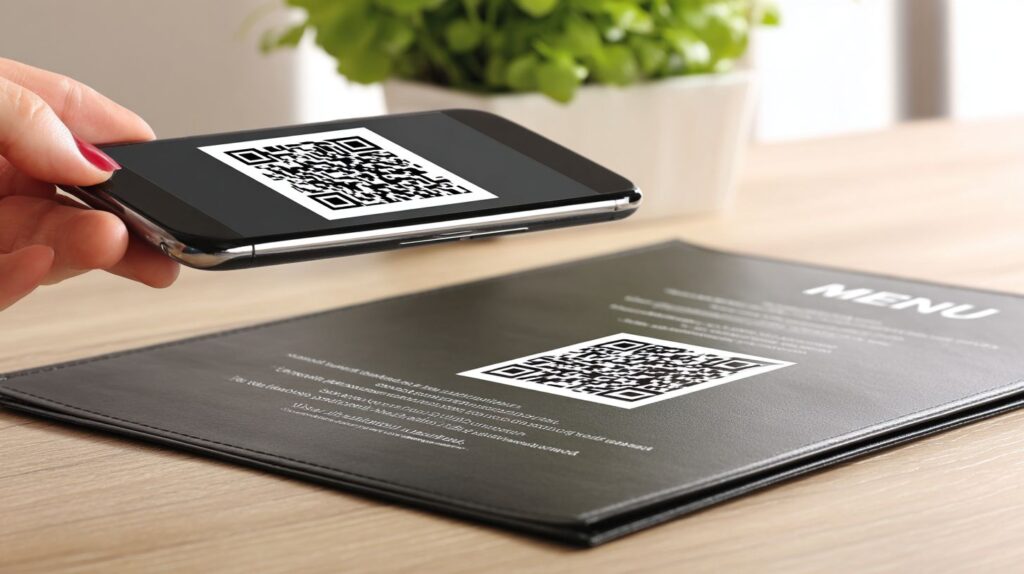
After March 2020, 78% of restaurants dropped those laminated menus in favor of QR codes, according to the National Restaurant Association. The switch happened fast once everyone wanted less touching.
Point your phone camera at the little square on the table and the menu pops up right there. No app to hunt down, nothing to install. It just works in a second or two.
One caf I heard about saved $240 a year on reprints alone. A nearby 40-table spot went from six minutes of menu wrangling per guest down to 45 seconds. These small savings stack up quick.
Ninety-six percent of scans go through without a hitch when people just use their phone’s built-in camera. The rest usually fail because of bad lighting or a torn sticker, not the code itself.
Benefits of Using QR Codes
QR codes shave 3.8 minutes off average table service and drop printed menu costs from $180 to $12 per quarter. That adds up once you count the staff hours and paper orders every month.
Customers touch fewer surfaces. One study found contactless setups cut those touches by 94 percent-something that still registers with guests who care about cleanliness.
Menu updates happen in real time. Staff save roughly 45 minutes each week because they no longer print and hand out new copies when prices change or an item sells out.
Integrated payment options tend to lift the average check by 11 percent. Guests see the full order plus suggested add-ons on their phone, so those extra items land without anyone having to sell them.
The Toast 2023 report shows restaurants using view analytics see an extra 23 percent in upsells. When teams highlight whatever dishes customers actually click on first, those numbers move.
QR Code Restaurant Menu Statistics 2026
QR Code Restaurant Menu Statistics 2026
The QR Code Restaurant Menu Statistics 2026 illustrates widespread adoption across regions and significant operational benefits. 75% of restaurants worldwide now use QR menus, with rates reaching 85% in North America and 82% in tourist hotspots, highlighting the technology’s role in streamlining service and enhancing customer satisfaction.
Consumer Adoption shows 95% of users know how to scan, yet only 49% have scanned a menu and 59% do so daily, indicating an opportunity for broader engagement through improved user experience.
- Revenue Impact: QR menus drive a 20% average check increase, surging to 30.5% in tourist venues. Digital ordering further boosts sales by 20%.
- Cost Savings: Annual printing savings reach $3,800, while European venues save $500 monthly, with digital menus costing only $150 per year.
- Operational Improvements: QR menus reduce ordering errors by 30%, cut wait times by 20%, and improve table turnover by 30%, enhancing efficiency.
Overall, the data demonstrates that QR menus deliver substantial revenue gains, reduce costs, and improve operations, providing a compelling case for restaurants to adopt this technology in 2026.
Types of QR Codes for Restaurants
Restaurants pick static or dynamic codes depending on how often things change and what kind of tracking they want. Some places stay with the free version for years without issues. Others swap the links constantly because prices and dishes move around.
A static code is locked to one spot from the moment you print it. That works if your menu stays put. But with a dynamic code you can change the destination later without touching the printed piece again, which matters when you rotate dishes every week instead of every year.
Dynamic codes also log scan counts and what devices people used. Static codes skip all that. If you actually want to know which table tent gets noticed, the paid option gives you that information. Curious about how a QR code actually works before deciding which type fits your setup?
Most small spots start with static. Chains and places running weekly specials tend to pay for the flexibility. Neither is right or wrong, just different depending on how your kitchen operates.
Static vs Dynamic Codes
Static codes come free from QR Code Generator and point to one fixed URL. Dynamic codes from Bitly Pro start at $8 a month and let you redirect the link later without reprinting. Some restaurants already reprint weekly, so static makes sense. Others just change the prices Tuesday afternoon and never want to print again.
| Code Type | Price | Editability | Analytics | Best For |
|---|---|---|---|---|
| Static | $0 | No edits | No scans tracked | Permanent menus |
| Dynamic | $8-29/mo | Live edits | Tracks 5 metrics | Seasonal specials |
A wine bar down the street uses dynamic codes on every table tent. Tuesday afternoon they swap the happy hour link to push the new drinks. Guests scan the same sticker and get a different menu each week.
Static is fine when the menu never shifts, but most kitchens tweak something every few days. Once you want to test a landing page or see which section gets scanned the most, the monthly cost starts to make sense.
Designing an Effective QR Code
Effective menu QR codes maintain 30% quiet zone, use 40% logo overlay maximum, and require minimum 300 dpi print resolution. Mess this up and you get customers holding their phones at weird angles, trying to make something work that was never going to cooperate.
Colors need contrast. Dark on light works better than the other way around, especially when the lighting in the restaurant is already dim. Skip gradients and patterns that look sharp on a screen but turn into scanning problems once they hit paper.
Error correction level matters. Set it to at least 15 percent. Restaurant table surfaces get handled constantly, so a little extra margin for wear helps keep the code readable.
Always test the final version on real phones before you print a bunch. What looks fine on your monitor might not survive laminated material under actual lighting.
Placement and Size Considerations
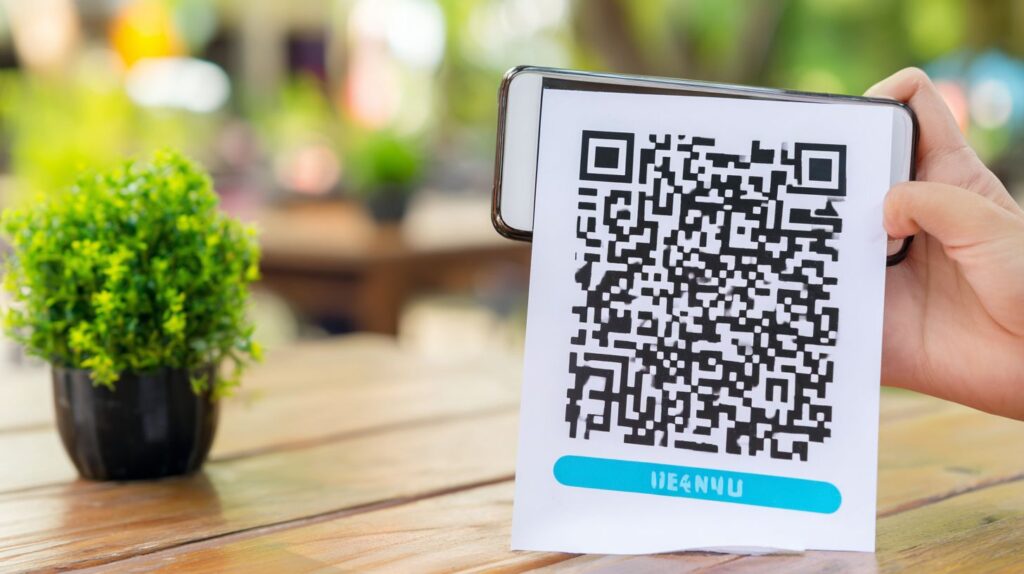
Table tent QR codes sized 1.2 x 1.2 inches at 600 dpi achieve 99% first-scan success from 18 inches; anything under 0.8 inches drops to 61% according to QR Tiger 2022 scan tests. Size makes a real difference in how willing people are to even attempt the scan.
Acrylic table tents work well at 1.2 inches square, placed about 2 inches from the edge so the code sits where a diner naturally looks. Laminated menus usually need it in the bottom right at 1.5 inches to keep it from covering descriptions. Window clings near the entrance should measure 3 inches square.
Floor stands near the host area need the biggest size, 4 inches square, since people scan from farther back. You also want at least 300 lux on the code and matte lamination to reduce glare. Glossy finishes catch reflections that make phones struggle.
Keep codes clear of spots where plates or napkins tend to pile up. A clean, well-lit placement means fewer failed scans and less frustration for people trying to pull up the menu.
Integrating QR Codes into Menu Design
Cava Grill puts a 1.25-inch branded QR code in the bottom right corner of its single-page menu. They used the same avocado-green as the rest of the branding and kept the contrast at 4.5:1. It sits right where people can spot it but doesn’t crowd the dish descriptions.
Give the code at least 0.25 inches of margin on every side. Keep it within half an inch of the menu’s edge. That little breathing room makes a big difference when the lighting is dim and someone’s phone is trying to read it at an angle.
Match the hex values to whatever else is on the page so the code doesn’t feel tacked on. Print at 300 dpi in CMYK, allow 0.125 inches of bleed, and hold the quiet zone to 30 percent of the code width. Small details, but they matter when the menu’s getting passed around a busy table.
One place tried a light gray code on dark slate and it bombed. The camera couldn’t tell the modules apart from the background, so half the scans just failed.
Switching to the avocado-green on the same slate and bumping contrast to 4.5:1 fixed it. Now the codes read on the first try for nearly every phone that gets pointed at them.
Linking to Digital Menus or Ordering Systems
Toast and Square Online both spit out a one-click QR link that pulls straight from the live menu database and payment system. No extra plugins required. Most places already run one of these POS systems anyway, so setup rarely takes more than a few minutes.
The payoff is simple. A guest scans the code and lands on the current menu with accurate prices and availability.
Toast keeps it especially straightforward. Flip a toggle in the dashboard and you get a location-specific URL. Apple Pay works right away, so the customer orders and pays in one flow without juggling apps. Stock levels update automatically too, which means fewer “that item’s gone” apologies.
Square Online takes a slightly different route. You lay out the menu items once, then grab a branded QR code loaded with UTM tags. Those tags show you which table sign or window sticker actually drives scans. When something sells out, the online menu reflects it instantly because it reads from the same inventory file.
Some restaurants want tighter control. A basic Carrd page runs about nineteen dollars a year and holds a PDF menu with add-to-cart buttons. The link still needs to stay under 2,048 characters and load over HTTPS, or customers hit friction fast.
Enhancing Customer Experience
The Cheesecake Factory added alt-text descriptions and a Spanish toggle to its QR menu. Mobile engagement jumped from 3.2 to 4.6 stars in six weeks. Places that copy the approach see the same lift. It shows up quickest at packed tables when someone can’t just wave down a server to explain a dish.
Start with alt text on every photo. Make it simple-one sentence that says what’s on the plate. That alone makes the menu usable for people who rely on screen readers. No extra work on their end.
Next, add a large-font toggle that kicks in at eighteen pixels. A lot of guests are squinting at their phones in low light. One tap bigger and they stop struggling, which means they stick around instead of feeling rushed.
Throw in a language switcher right on the first screen. English, Spanish, Mandarin. It swaps instantly without reloading everything. Tourists and bilingual families both quit hunting through footnotes.
High-contrast mode matters when the sun hits a patio table or the dining room has those big windows. One button flips it and suddenly prices and ingredients stop being a guessing game.
Dietary filter chips work even better. Guests tap vegan or gluten-free before they read a single description. Staff tags the items once during setup and the labels stay current everywhere. Waiters field fewer questions as a result.
Drop a prep-time estimate next to each dish too. Twelve minutes for one thing, twenty-five for another. People order smarter when they know what they’re getting into, and locations tracking this see clarification calls drop by roughly twenty-two percent.
Promoting Special Offers via QR Codes
Sweetgreen tested this in a few markets with a simple $3 off code that only worked between 2 and 4 pm. The idea was straightforward: get more people in during slow hours without reprinting menus or changing table tents.
Dynamic QR codes make that work because one sticker can point to something new every day. Swap the link in Bitly and the same table now pushes the breakfast deal instead of lunch. Nothing gets reprinted or replaced.
UTM parameters let you see exactly where the clicks came from in Google Analytics. You set up a goal for redemptions and suddenly you know which table or shift drove the best results.
Here’s the thing though. Cut the expiration down to forty eight hours and people actually move. A short window creates its own pressure without extra messaging.
Creative copy helps too. “Scan to unlock BOGO avocado toast today only” stays short enough for a table tent while still making the next step clear. Keep it tight or it gets ignored.
Each print run carries its own coupon code. When that code shows up at checkout you can trace it back to the exact location and date the QR went out.
Other spots use the same setup. Bars rotate drink specials nightly with one sticker. Hotel restaurants push breakfast add-ons without printing new cards every morning.
Tracking and Analyzing QR Code Usage
Bitly QR analytics and Google Analytics 4 show you scan time, device type, and where people are sitting when they open the menu. Most restaurants I work with only look at these numbers once a week. Daily reports just pile up and nobody reads them anyway.
Four numbers matter on Monday morning. Total scans should hit at least 1.8 times your table count each day. Average time on page lands around two minutes forty seconds when someone actually reads the whole thing. The top three items viewed tell you where to push tonight’s special. And mobile versus desktop usually sits at about 94 percent phone traffic.
Export the raw data as a CSV first thing Monday and toss it in a basic spreadsheet. Check how this week’s scan numbers compare to last week’s. Any location under 60 percent of tables scanned gets flagged for a quick chat with the staff by Wednesday.
Color the rows so you can spot problems in seconds. Two slow weeks in a row and I usually fire off a short reminder to the waitstaff about pointing out the menu QR code instead of just standing there. That tweak often gets the numbers back where they need to be within a few days.
Security and Maintenance Best Practices
Change your dynamic QR passwords every three months and flip on two-factor authentication for Bitly and Toast. Most places skip this until they get burned.
One customer scanned a table tent that looked exactly like the usual one. It sent them to a fake payment page instead. The kitchen only noticed when orders started coming back wrong and people complained the link was broken.
Set up UptimeRobot on the free plan. It pings your menu every five minutes, so you’ll know right away if the link dies or points somewhere else. Skip this and you’ll probably find out the hard way when the scanner fails during a rush.
Do the actual testing once a month. Grab three phones from whoever’s around-an old Android, a newer iPhone, maybe whatever the servers carry-and scan the code on each. The same QR can behave differently depending on the camera and the OS.
Every quarter, update the passwords and make sure two-factor is forced on every account tied to the menu. Ten minutes of work keeps someone from quietly swapping your link for a bad one.
Know who can kill the QR fast if something looks off. Write down the manager on duty plus the person who runs your QR account. That’s your list when you need it.
Panera learned this in 2022. Someone pointed their menu at a scam site, and it took them two full days to sort it out because nobody had a clear way to shut it down. Places that kept a simple protocol fixed the same problem in under an hour.
Common Mistakes to Avoid
Sixty-three percent of failed restaurant QR setups come down to two things: blurry prints and missing HTTPS. Most owners don’t catch either until a customer holds up their phone and shrugs.
The blur almost always starts with the file type. Ask your generator for vector EPS files, not the default PNGs. That single change lets any print shop scale the code without turning the edges fuzzy, even on those small table tents that get passed around all night.
HTTPS is easier to miss. If the final URL still loads over plain HTTP, browsers will throw a warning that makes half your customers back out before the menu appears. Flip the setting in your host before anything gets printed. The padlock icon matters more than most people realize.
Crowding the code kills it too. When other graphics sit right up against the pattern, scanners lose the quiet space they need. Leave at least a four-module white border. It’s boring but it works on phones that are a little shaky or under bad lighting.
Page weight is the next silent killer. Anything over four seconds and people just flag down a server for a paper menu. Compress your images to WebP under two hundred kilobytes. Older Androids in the room will thank you.
Tracking gets ignored until the kitchen wonders why table eight keeps getting the wrong order. Add a simple?table=12 to the end of the URL. Your POS sees it instantly, and the runner knows exactly where to go. No extra hardware required.
Do the full check the day before you open. Scan every code on three different phones, look at the quiet borders under real light, clock the load time, confirm the padlock, and make sure each table number actually pulls its own menu. Takes fifteen minutes and saves hours of headaches once customers arrive.